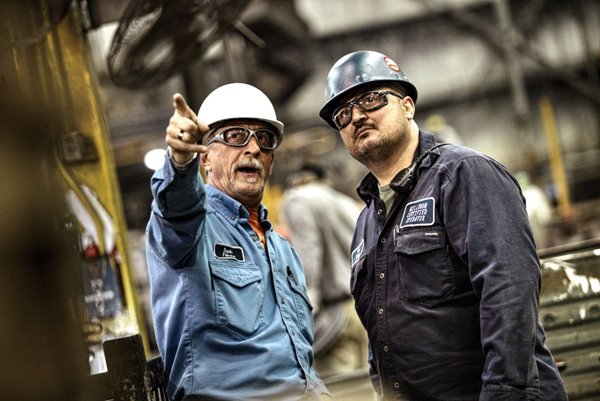
Engineering in Action: Celebrating Engineering Week at Waupaca Foundry
Kim Viduski | Waupaca FoundryNational Engineering Week (February 22–28, 2026) recognizes the people who turn ideas into reality – the problem solvers behind modern manufacturing.
At Waupaca Foundry, engineering extends far beyond design software and technical drawings. It lives on the foundry floor – in the equipment that powers production and in the modernization efforts that keep operations safe and efficient.
Project Engineer Luke Sands has seen that firsthand.
Sands began his career at Waupaca Foundry more than a decade ago as a high school co-op student working in the P3 coreroom and maintenance. Today, three years into his role as an engineer, that early hands-on experience continues to shape his perspective.
“I have always been interested in learning about how things work,” Sands says. “This led me down the path of wanting to make things work.”
Engineering Starts on the Foundry Floor
According to Sands, no two engineering projects at Waupaca Foundry look exactly alike.
“We work on a very broad range of projects, and nearly every one is different,” he explains.
From small production improvements to redesigning entire sections of a facility, engineering at Waupaca Foundry demands adaptability and cross-functional collaboration. Production and maintenance teams are often involved from the very beginning, ensuring solutions are practical, efficient, and aligned with real-world operations. Engineering in manufacturing, Sands notes, means solving problems not just on paper, but in steel and concrete – and doing it as a team.
Modernizing for the Future
One example of engineering in action is the charge yard crane replacement project currently underway.
The existing cranes have served the plant for decades. The modernization effort focuses on improving safety, consistency, and overall operator experience while updating aging infrastructure.
“The new cranes will be more modern, have better controls, and be more consistent with one another,” Sands says.
Improved access and updated systems will create a safer and more reliable environment for operators and maintenance personnel. The project also highlights a common reality in manufacturing engineering – adapting to the unexpected.
“We are working with several old buildings, each built a little differently,” he explains. “Adding to buildings that are not where you expect them to be can be difficult.”
It’s a reminder that engineering in a foundry environment often requires creativity, flexibility, and real-time problem solving.
Driven by Progress
Looking ahead, Sands sees automation as one of the most exciting areas shaping the future of manufacturing. Automating difficult processes can make jobs safer, easier, and more desirable. At the same time, evolving supply chain conditions require engineers to plan carefully and adapt as projects face increasingly complex timelines.
But whether it’s modernizing aging equipment, integrating automation, or navigating complex project timelines, the role of engineering remains the same: turning ideas into reality on the foundry floor.
During Engineering Week, we recognize the engineers who make that happen every day – applying expertise and practical problem solving to keep the foundry moving forward.